How It All Came Together
A course from notes and exam materials
Ivis García started building a course for Texas A&M from her own notes studying for the 2014 AICP exam, along with APA Policy Guides, PAS (Planning Advisory Service) reports, and the AICP study guides most candidates use to prepare. She fed all of it to ChatGPT as context to help organize and draft lessons, then edited everything by hand, placing the course on Canvas for her students and rounding it out with resources gathered from colleagues that summer.
Voiced, and shared for free
Jason Holt turned the course into audio using an AI generated voice from ElevenLabs, editing and producing it into a free podcast, Urban Planning Foundations, on Spotify. Ivis put the lessons online on a Google site so other exam-takers could use them too.
Rebuilt into AICP.city
Jason later took all of the previous materials, added some new ones, and rebuilt the whole thing, narrative, audio, and practice questions, using Claude Code, with Ivis editing along the way. That became AICP.city.
The story underneath it all
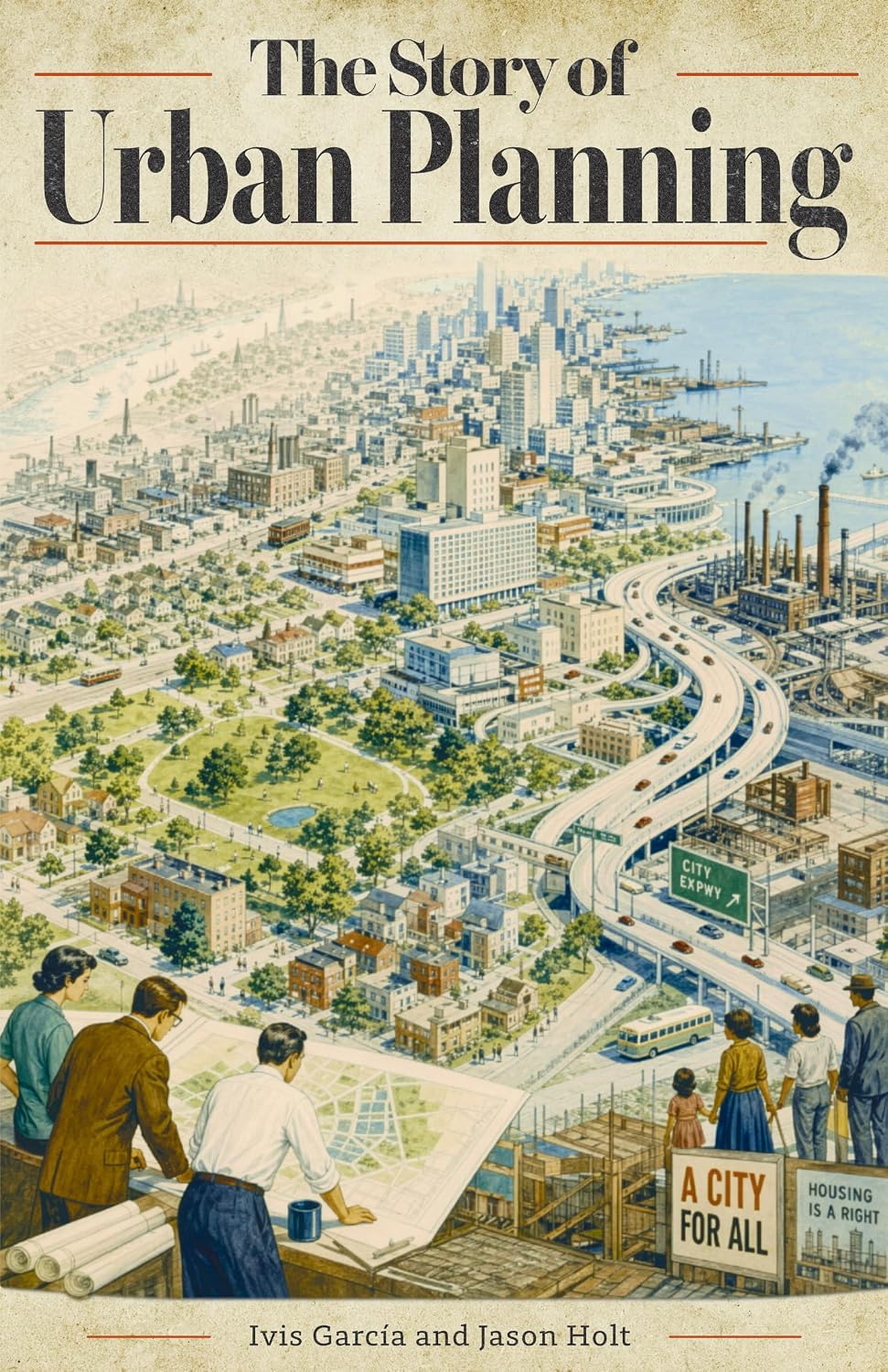
Somewhere in that process they noticed the facts weren't really a list: each one was a response to the one before it. That realization became The Story of Urban Planning.
To write it, they started from the notes behind AICP.city and Urban Planning Foundations, then collected more documents. They listened to the material read aloud in ElevenReader, pausing often to record voice notes with WhisperFlow, and reorganized those notes into a new draft, which they edited over and over. They used Obsidian as a Markdown viewer, so nothing ever had to be converted.